Two years after the launch of the project “Strengthening the resilience of ecosystems and communities threatened by climate change in the Macaya Biosphere Reserve” in Haiti, the impact of the methodology known as “Village Savings and Loan Association” (VSLA) is being confirmed in the municipalities of Tiburon, Les Irois, and Moron. VSLAs are one of the key components of this project, more commonly referred to as the Climat II project, implemented by the Arbeiter-Samariter-Bund (ASB) and its partners in southern Haiti.
At the bustling market in Tiburon, Arnotte Souverain watches over her stall. Two years ago, this vendor was struggling to maintain enough stock to feed her family. Her daily life changed in October 2023 when she joined the first VSLA group created as part of the Climate II project. Today, she is no longer alone: more than 2,400 residents across the project’s three target communes are now participating in this community savings initiative, which is restoring hope and opening up sustainable economic prospects.
In just 18 months:
- 100 groups have been formed,
- 2,407 members have joined, 62% of whom are women,
- 22.6 million gourdes have been saved,
- 2,485 loans totaling 20.6 millions gourdes have already been granted.
These figures reflect the economic vitality generated by the VSLA methodology, which offers viable alternatives to rural populations often excluded from formal financial services.
A financial inclusion model serving communities
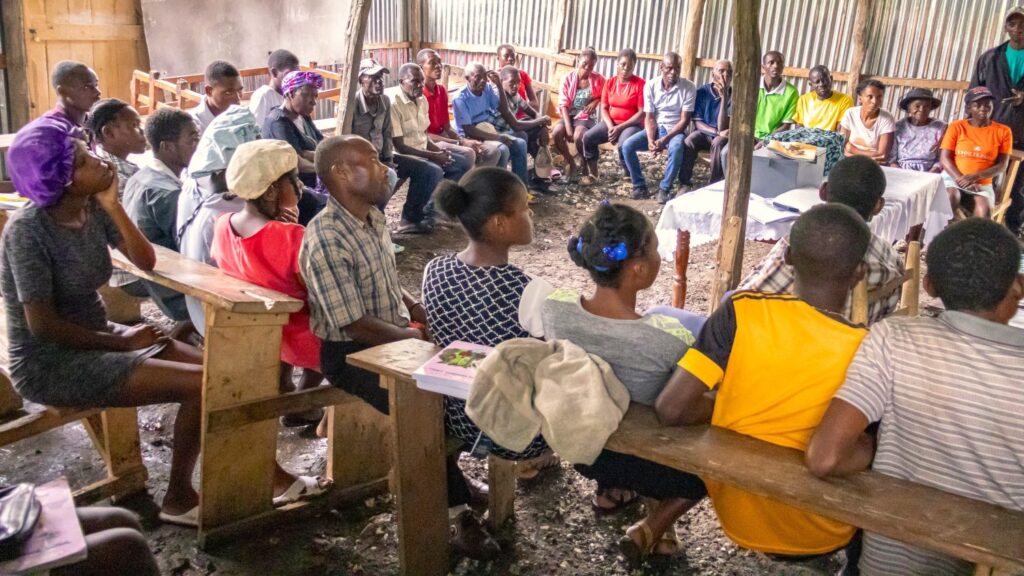
VSALs are simple, safe and accessible community structures for saving, borrowing and investing. Each group, made up of 20 to 30 people, establishes its own internal rules in a participatory manner, ensuring transparency and fairness. Weekly or monthly savings accumulate in a secure fund, enabling short-term credit to be granted at fair rates for the benefit of all members.
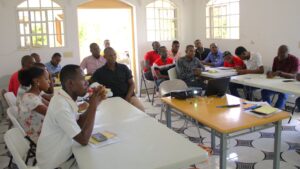
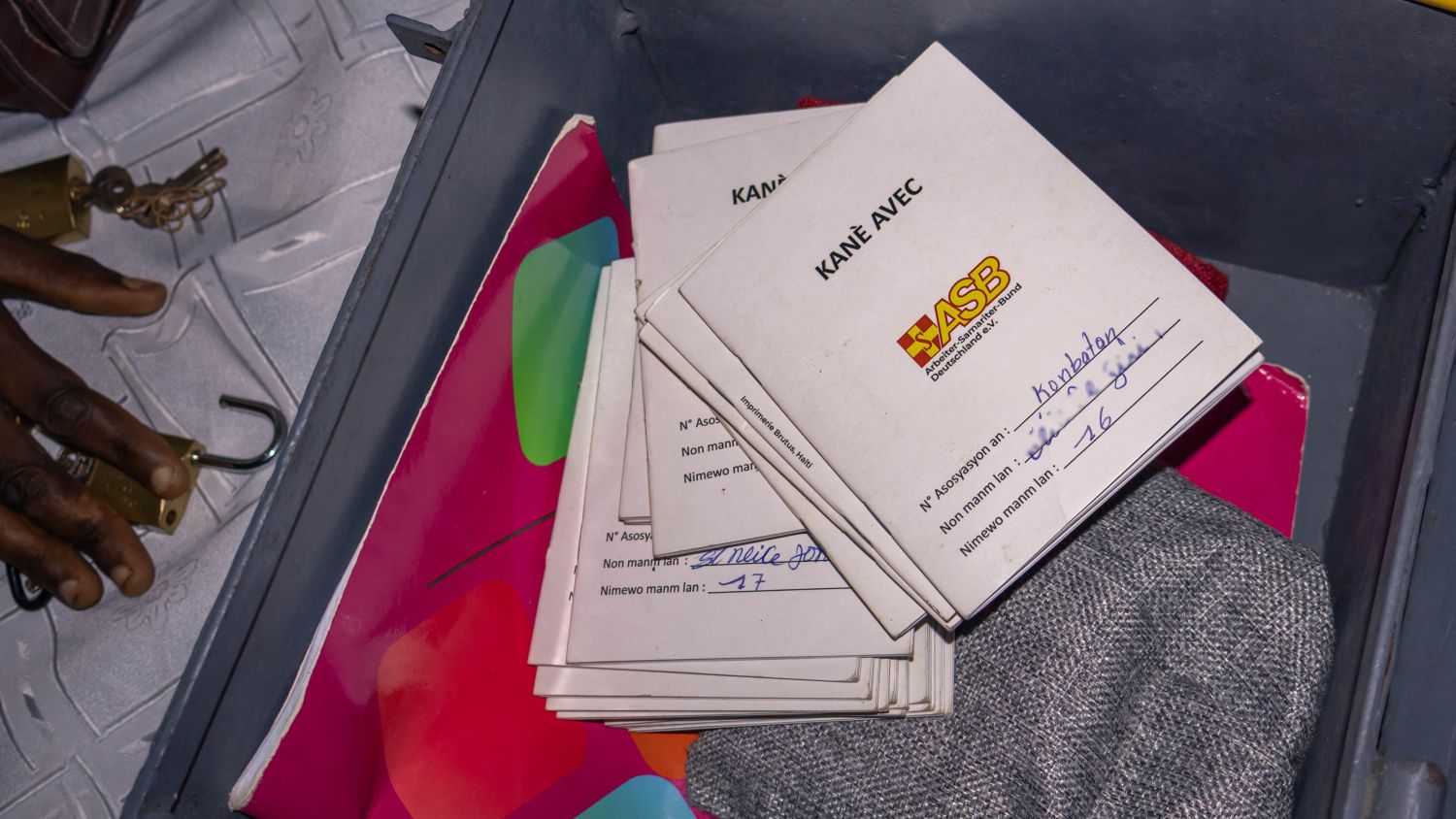
As part of the Climate II project, 22 field agents have been trained since July 2023. Thanks to them, communities benefit not only not only material tools (passbooks, secure cash boxes), but also a methodological framework that guarantees compliance with VSLA principles.
This financial inclusion model takes on particular importance around the Grand Bois National Nature Park, one of the Macaya Biosphere Parks, where communities face economic precariousness that drives them to overuse the park’s natural resources and buffer zones to ensure their survival. VSLA offers a path to resilience by diversifying livelihoods and reducing dependence on the park’s threatened natural resources.
When access to credit transforms lives
While the numbers demonstrate collective success, individual stories best illustrate the impact. Two remarkable stories testify to the transformative potential of VSLAs in southern Haiti.
Arnotte Souverain: from small stocks to commercial stability.
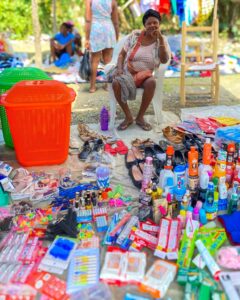
A 45-year-old mother of five and vendor in Tiburon, Madame Souverain had previously lived on limited means, unable to diversify her products on the market. Joining her VSLA group was a turning point. After an initial loan of 40,000 gourdes, she increased her purchases of goods. Two further successive loans (50,000 then 35,000 gourdes) enabled her to stabilize her business, maintain a constant stock and cope even with late payments from her customers.
In addition to her business, the benefits have reached her extended family: in times of insecurity in Tiburon, she has been able to house and feed relatives displaced by the violence of armed groups. Her message is clear: “I ask those who support this initiative to continue to encourage, strengthen and multiply it. It’s a very useful project for our community.”
Désiré Clérissier: bouncing back after losing everything.
At the age of 26, this young merchant from Tiburon saw his hopes dashed when he lost over 150,000 gourdes worth of goods in an armed robbery. Without the support of his VSLA group, he would probably have given up his business. His first loan of 40,000 gourdes changed all that: he relaunched his business by selling gasoline and agricultural produce at the market in Les Cayes. Today, Désiré provides for his fiancée and their baby, inspires other young people to join VSLA and illustrates the power of community resilience.
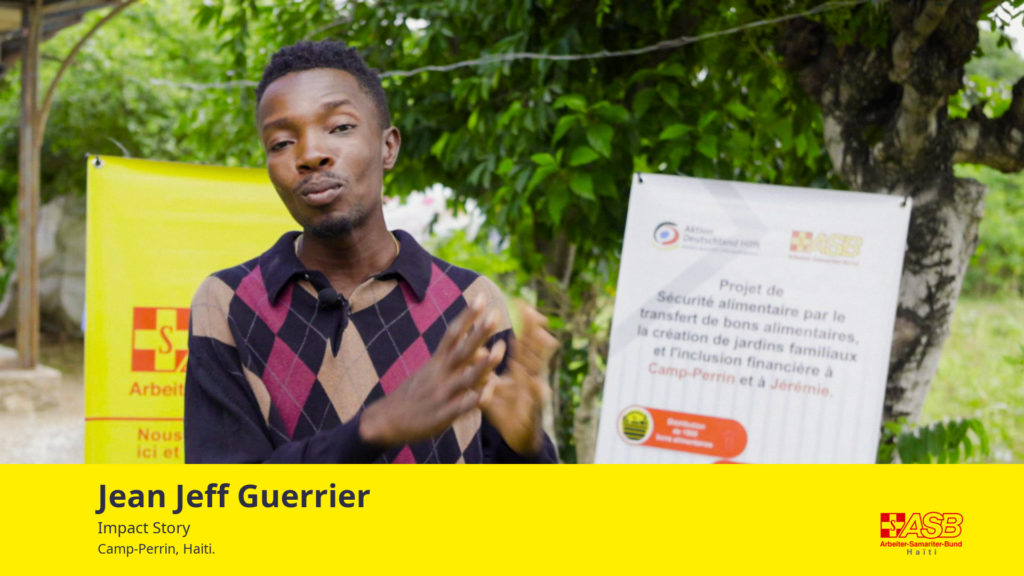
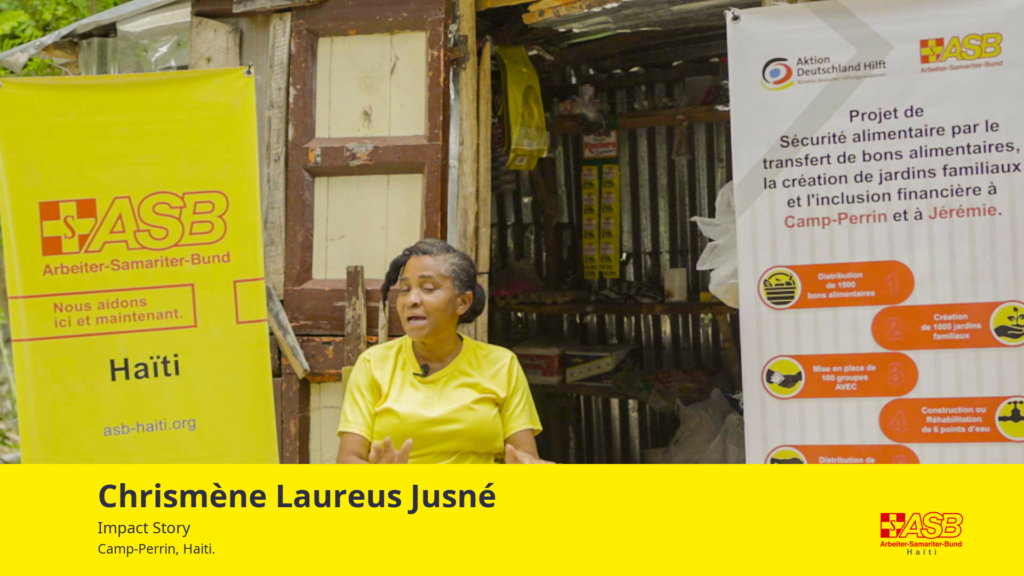
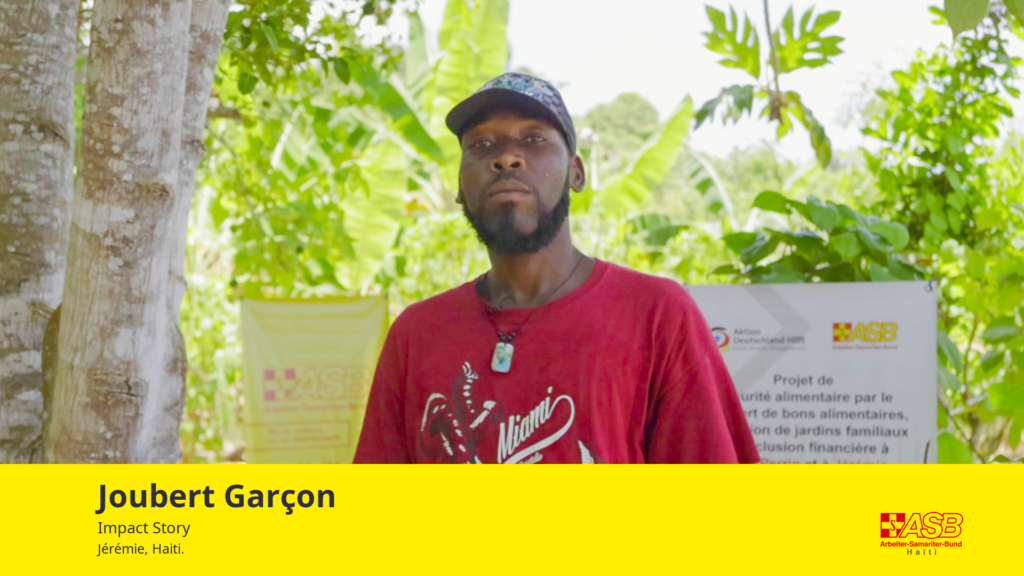
The “Combattant” group, in the commune of Moron, illustrates this success. After its first year of activity, its 23 members have saved nearly 200,000 gourdes. For its president, Estiphil Joel, school principal and pastor, the material contributions (cash box, passbooks, monitoring kit) and training explain the success: “The tools provided and the regular visits by project representatives have strengthened confidence and boosted participation.” For Enouse Belfort, a vendor and mother of eight, access to low-cost credit is a major relief: “Thanks to the loans, I was able to finance the start of the new school year without having to make expensive trips to Jérémie, where bank interest rates are much higher. Finally, Jean Rigal Glaude, teacher and group secretary, emphasizes the educational and multiplier value of VSLA : “Unlike the bank, my money grows thanks to collective interests. It’s an initiative that needs to be promoted in our communities.” These testimonials underline a strong trend: early groups are inspiring the creation of new ones in nearby localities, boosting the spontaneous replication and extension of the initiative. The VSLA methodology has played a key role in supporting communities living around the Macaya Biosphere Reserve in the south of the country. However, the VSLA initiative is only one pillar of a broader strategy spearheaded by the Climate II project, funded by the German Federal Ministry for Economic Cooperation and Development (BMZ) and implemented by ASB in partnership with the Haiti National Trust (HNT) and the Federation of Development Organizations of Tiburon (FeODTi). The project is active on several other fronts: strengthening governance of the Grand Bois National Nature Park, one of the Macaya Biosphere Parks; ecological rehabilitation through reforestation and ecosystem restoration; development of sustainable value chains such as beekeeping; and institutional strengthening of local partners. These actions converge towards a single goal: to reduce household dependence on threatened forests, while promoting alternative livelihoods that combine environmental protection and economic security. The sustainability of these achievements rests on three foundations: community autonomy in management, adaptability to the specific needs of populations and the replicability of successful models. By combining financial inclusion, sustainable alternatives and ecological governance, the Climate II project demonstrates that a safer, more autonomous future is possible for families in southern Haiti – a future where community resilience and ecosystem protection go hand in hand. 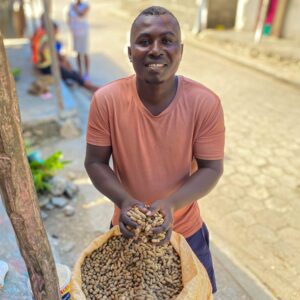
Voices from the field: renewed trust and solidarity
Beyond VSLAs: an integrated vision of resilience