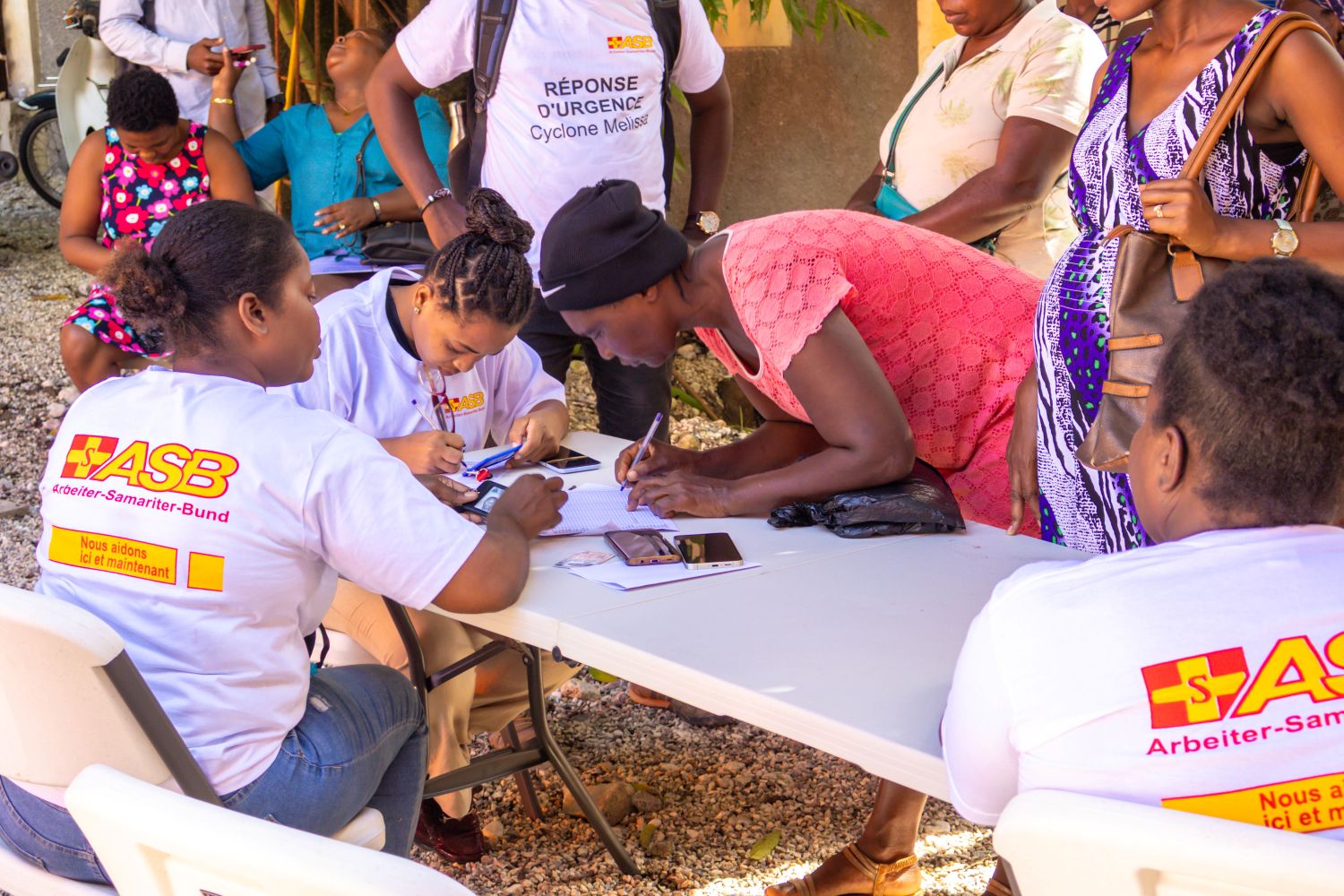
On November 3, 2025, ASB Haiti launched a six-month emergency response in the municipalities of Camp-Perrin, Port-Salut, and Jérémie, which were severely affected by Hurricane Melissa. Funded by Aktion Deutschland Hilft (ADH) and the organization’s own funds, the project consists of two complementary phases: an initial phase of immediate assistance with water, food, and hygiene, followed by a second phase focused on monetary support and disaster risk reduction awareness. This integrated approach aims to alleviate immediate distress while strengthening the medium-term resilience of the affected communities.
Between October 21 and 31, 2025, Hurricane Melissa, a Category 5 storm, swept across the Caribbean with winds exceeding 155 mph and torrential rains, causing flooding, landslides, and the destruction of thousands of livelihoods in Haiti. According to the Civil Protection Directorate (DGPC), 43 people lost their lives, 21 were injured, and nearly 14,000 were displaced in the south of the country. In areas where ASB was already working on development and resilience, the damage was particularly severe: vegetable gardens were washed away, water networks were damaged, fishing canoes were destroyed, and families were forced to seek refuge in overcrowded shelters. In response to this situation, ASB Haiti deployed a targeted humanitarian intervention, in accordance with the Sphere Standards and the Core Humanitarian Standard (CHS), to support the most vulnerable households and preserve their dignity.
An initial phase focused on life-saving assistance
The first phase of ASB Haiti’s response focused on saving lives and meeting the basic needs of families in difficulty. In coordination with local authorities and community structures, including Local Civil Protection Committees (CLPC) and Drinking Water and Sanitation Committees (CAEPA), three complementary actions were deployed: the distribution of drinking water, food support, and the distribution of hygiene kits.
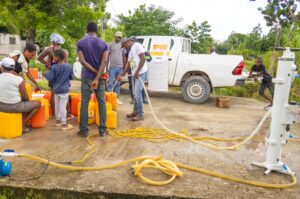
Faced with the immediate risk of waterborne diseases caused by the destruction of water supply networks, nearly 100,000 liters of contaminated water were treated using SkyHydrant portable filtration units. In Camp-Perrin, where the water system had suffered extensive damage, thousands of residents were left without safe access to water. Mario, president of the CAEPA in Camp-Perrin, said: “The situation is critical. The main system has been out of service since the hurricane. Without support, families have no water.”
ASB’s intervention helped restore a minimum supply and reduce the risk of epidemics such as diarrhea and cholera, which are often seen after natural disasters.
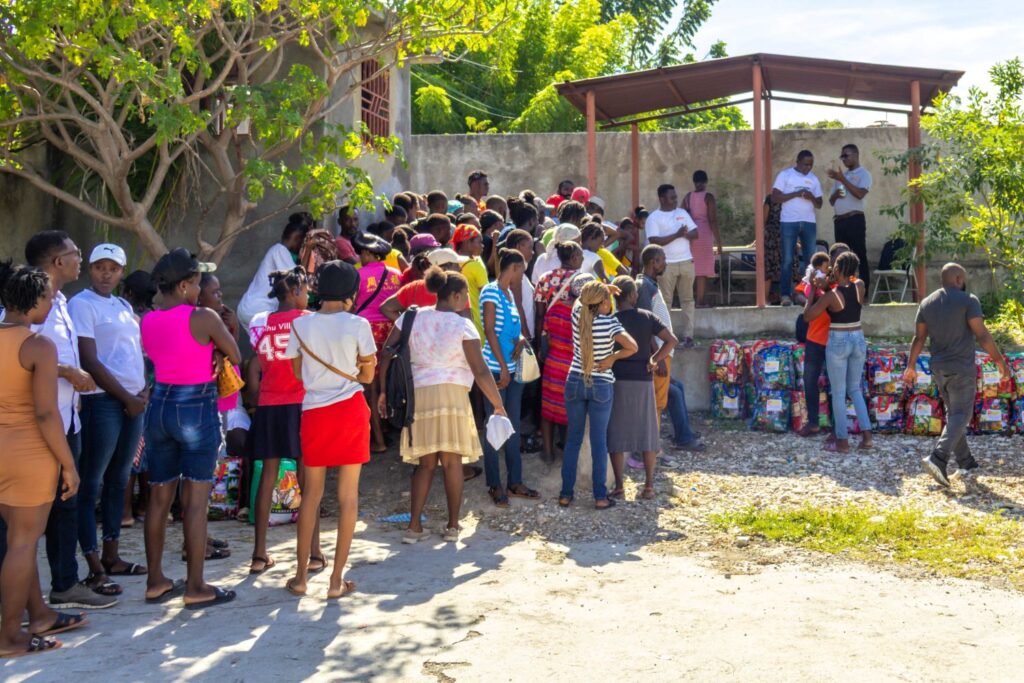
At the same time, 300 food kits were distributed to the most affected households to address acute food insecurity, a direct consequence of crop destruction and the disruption of local markets. In addition, 300 hygiene kits were provided to prevent the spread of disease in damaged homes or temporary shelters, thereby helping to maintain minimum domestic hygiene standards, which are essential for public health in post-disaster situations.
Going beyond the immediate emergency: monetary support and risk reduction
While the first phase of the project stabilized the immediate situation for many families, the second phase aims to support their recovery and strengthen their resilience in the face of future shocks. For the remaining months of the operation, two major actions are planned, mainly in Port-Salut.
The first consists of unconditional cash assistance for 150 vulnerable displaced families, each receiving €80 in cash. This direct transfer allows households to meet their priorities, whether food, healthcare, schooling, or minor repairs, while stimulating local markets and respecting the choices and dignity of the beneficiaries.
At the same time, awareness-raising sessions on climate change and disaster risk reduction (DRR) will be organized to strengthen community knowledge. These activities aim to help residents understand hazards, adopt safer behaviors, and collectively prepare for future climate events.
The faces behind the emergency
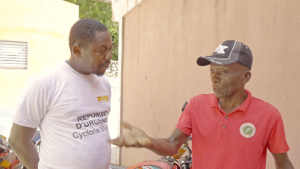
Beyond the numbers, the impact of these actions is reflected in the stories of people like Joseph and Edele, symbols of resilience in reconstruction.
A farmer in Camp-Perrin, Joseph saw his fields of corn, peas, and yams destroyed by torrential rains: “Everything I had to live on is gone,” he says. “The food kit arrived at a crucial moment.”
In Port-Salut, Edèle lost her livestock and the fishing boat that provided for her family: “We lost everything, but this aid helped us get by,” she says.
These testimonials reflect the reality of hundreds of families in southern Haiti: households already weakened by successive crises, who see this response as a source of hope for recovery and restored dignity.
Towards safer and more resilient communities in southern Haiti
Hurricane Melissa has once again highlighted the vulnerability of rural and coastal communities in southern Haiti, where every climate shock undermines years of effort and progress.
Through this emergency response, ASB-Haiti and its partners are providing vital support in the form of water, food, and hygiene supplies, offering flexible cash assistance to families, and investing in community preparedness for climate risks. Alongside affected communities, local authorities, and partners such as ADH, ASB-Haiti continues to work to build safer, stronger, and more resilient communities in the south of the country, so that each new hurricane does not mean families have to start from scratch.