In southern Haiti and Grand’Anse, the ongoing degradation of ecosystems, growing pressure on water resources, and intensifying climate shocks are testing the ability of these regions to maintain essential services and sustainable livelihoods. In this context of structural vulnerability, isolated sectoral responses quickly reveal their limitations, making a concerted approach based on coordination between actors and rooted in local realities essential.
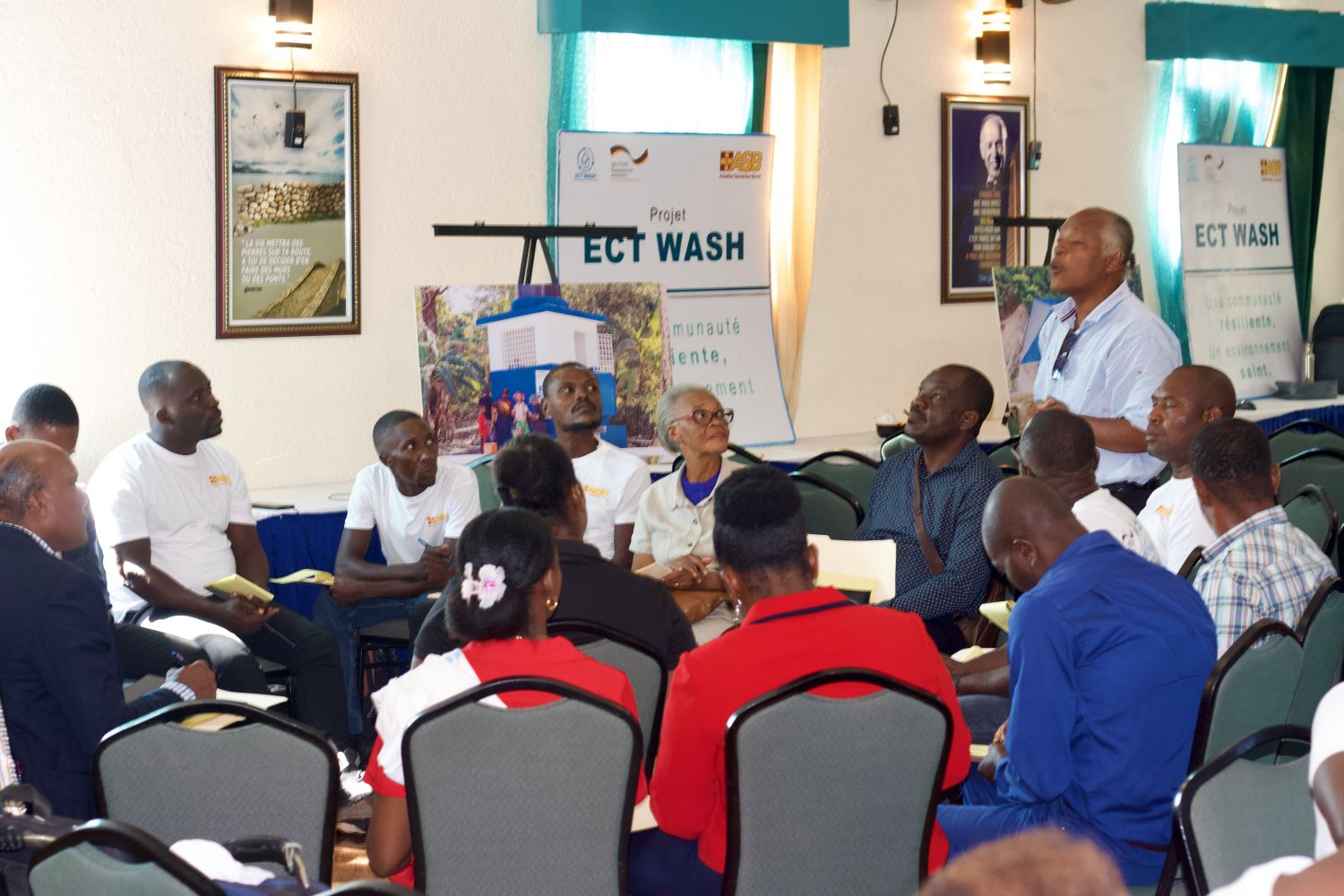
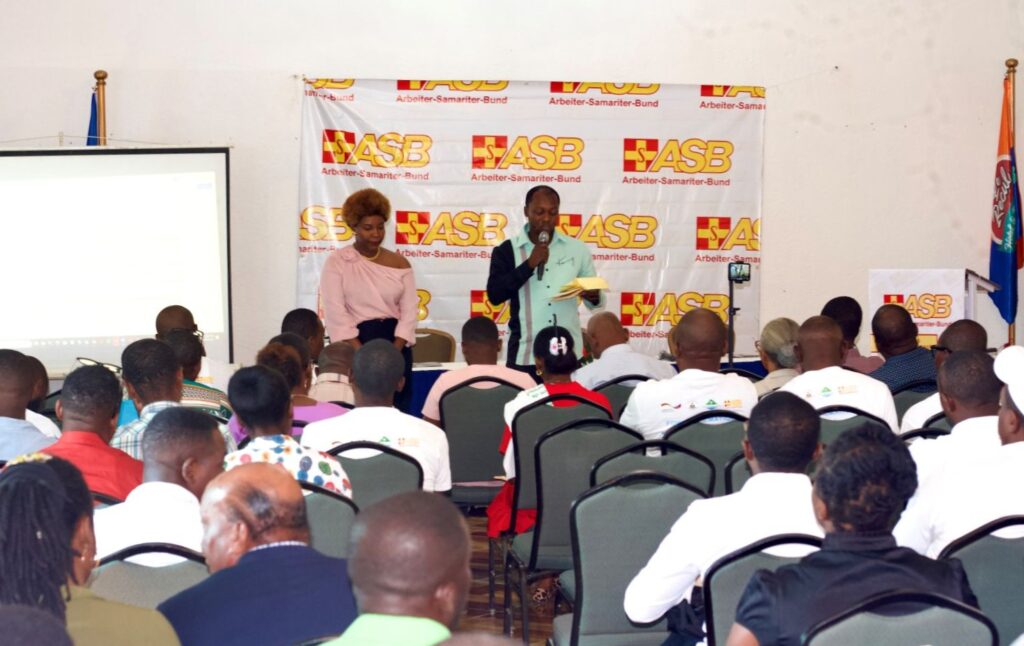
It is with this in mind that, on December 5, 2025, the Arbeiter-Samariter-Bund (ASB) organized a thematic and inter-institutional forum in Camp-Perrin on the theme of “Working together for climate resilience and the protection of our environment.” This meeting is part of a long-standing initiative by ASB in Haiti to strengthen climate resilience, environmental governance, and the sustainability of essential services through dialogue and the joint development of solutions tailored to local areas.
A framework for interinstitutional dialogue rooted in local communities

The forum brought together 76 participants, 41% of whom were women, from the six municipalities where ASB projects are implemented in the departments of Sud and Grand’Anse: Camp-Perrin, Les Irois, Moron, Jérémie, Corail, and Saint-Jean-du-Sud.
State institutions, local authorities, community organizations, NGOs, technical partners, and the media were represented, promoting exchanges between local, municipal, and departmental levels.
This meeting was held in a context marked by the weakening of ecosystems and the increased exposure of rural communities to climate hazards. It was part of two complementary projects led by ASB:
The project “Strengthening the resilience of ecosystems and communities threatened by climate change in the Macaya Biosphere Reserve ” (Tiburon, Moron, Les Irois),
and the project “Strengthening local capacities for climate-sensitive and universal water, sanitation, and hygiene (WASH)” (Corail and Saint-Jean-du-Sud).
Three key themes:

- Water and climate change: increasing pressure on resources
Discussions highlighted the gradual decline in water sources, the variability of flows, and the vulnerability of WASH infrastructure to climate hazards. The representative of the Regional Office for Drinking Water and Sanitation in the South Department (OREPA-Sud) drew particular attention to the growing difficulties in providing drinking water services, calling for more sustainable and proactive management of water resources, combining technical solutions, community involvement, and institutional coordination.
Participants emphasized that secure access to water is a cross-cutting issue, affecting public health, food security, and the economic resilience of households.
- Ecological restoration and biodiversity: the central role of communities
Discussions on ecological restoration highlighted the importance of participatory ecosystem management, particularly around the Grand Bois National Natural Park. The Director of the National Agency for Protected Areas (ANAP) reiterated the mission to protect biodiversity and the importance of the National Strategy and Action Plan for Biodiversity – Haiti Biodiversity 2030, emphasizing that the success of conservation efforts depends on the support and commitment of local communities.
The presentations emphasized the need to strengthen reforestation activities, protect buffer zones, and combat harmful practices, while developing sustainable economic alternatives to reduce pressure on natural resources.
- Environmental education: a sustainable lever for adaptation
Environmental education emerged as a key tool for supporting behavioral change and strengthening long-term climate adaptation. Participants stressed the importance of integrating environmental concepts into community and school activities in order to develop sustainable ecological awareness, particularly among young people.
Discussions also highlighted the need to link awareness-raising, advocacy, and the application of existing legal frameworks in order to promote greater civic responsibility in the face of environmental challenges.
Exchanges with tangible effects
Beyond the debates, the forum produced several concrete results:
- Strengthened inter-institutional coordination between stakeholders in the South and Grand’Anse;
- Identification of practical and environmentally sensitive solutions adapted to local contexts;
- The consolidation of existing partnerships and the identification of new opportunities for collaboration;
- An in-depth dialogue between public authorities, technical actors, and communities on climate and ecological transition issues.
In closing, a call to action was launched, inviting the institutions and partners present to strengthen their commitment to implementing coordinated initiatives in favor of climate resilience, in line with local and national priorities.
Towards collectively built resilience
By organizing this forum, ASB reaffirms its conviction that climate resilience cannot be achieved without consultation, complementarity, and collective commitment. By promoting dialogue between institutional, technical, and community actors, the organization contributes to the emergence of sustainable responses that combine ecosystem protection, improvement of essential services, and strengthening of local capacities.
This forum thus marks an important step towards building more resilient territories, where communities, institutions, and partners move forward together in the face of climate challenges.