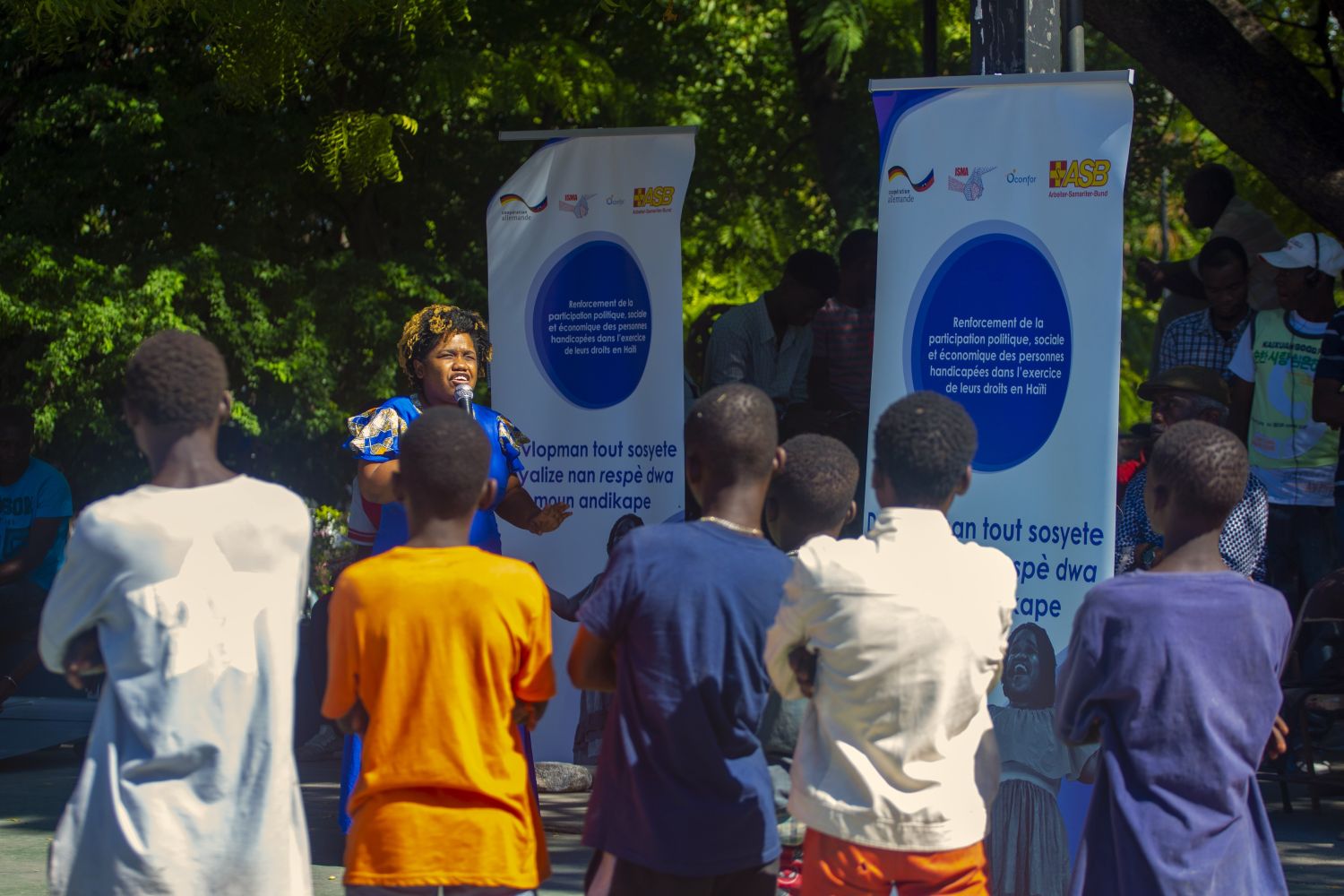
In a country where people with disabilities continue to face profound discrimination, persistent social exclusion, and multiple obstacles to exercising their rights, the Arbeiter-Samariter-Bund (ASB) completed a project in April 2025 dedicated to strengthening their civic participation. Carried out in a national context marked by ongoing insecurity, the weakening of public institutions, and declining social funding, the initiative “Strengthening the political, social, and economic participation of people with disabilities in the exercise of their rights in Haiti” offered a structured, human rights-based response, leaving behind concrete achievements in terms of collective organization, autonomy, and social recognition.
Implemented from November 2021 to April 2025, the project had one central objective: to enable persons with disabilities and their organizations to position themselves as full actors of change, capable of influencing decisions and participating fully in social and economic life. ASB-Haiti worked closely with two local partners, Inisyativ Sante Mantal Ayiti (ISMA) and the Organisation de Concertation des Organisations des Personnes Handicapées (OCONFOR), whose territorial presence and sectoral expertise were decisive. Supported by funding from the German Federal Ministry for Economic Cooperation and Development (BMZ), the intervention focused on inclusive, accessible, and transferable solutions, seeking efficient use of resources in a constrained environment.
Inclusion, citizenship, and participation: a comprehensive response to long-term exclusion
In Haiti, disability is still too often viewed from the perspective of assistance, relegating those affected to a passive role. This perception translates into low representation in consultation forums, limited consideration of the abilities of people with disabilities, and persistent difficulties in accessing education, employment, healthcare, and political participation. Faced with this reality, the project has opted for a comprehensive approach aimed at simultaneously addressing several drivers of exclusion.
The intervention strategy was organized around four complementary pillars: 1) strengthening the individual and organizational capacities of organizations of persons with disabilities (OPDs); 2) supporting collective socio-economic alternatives that promote material autonomy; 3) transforming social perceptions through inclusive communication and adapted sports; 4) establishing sustainable tools and services that guarantee accessibility and continuity of achievements. Far from being a one-off response, this approach aimed to create genuine social infrastructures enabling persons with disabilities to exercise their rights over the long term.
1. Leadership, advocacy, and governance of PHOs: strengthening capacity for action
Capacity building for DPOs formed the basis of the project. A total of 369 persons with disabilities received training in five key areas, covering leadership, organizational development, advocacy and lobbying, conflict resolution, socio-economic alternatives, and inclusive communication.
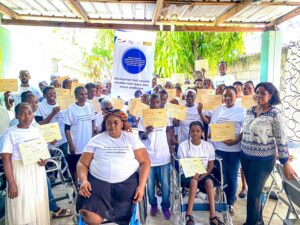
As part of the leadership and organizational governance training, 141 leaders from several departments were equipped to improve the internal management of their organizations, structure their actions, and strengthen their representativeness. At the same time, 136 people received in-depth training in advocacy, lobbying, and conflict resolution, enabling them to better understand national and international legal frameworks relating to the rights of persons with disabilities and to engage in structured dialogue with authorities and other institutional actors.
The effects of these training courses were measured through pre- and post-training evaluations. The results indicate an average increase of 61.2% in participants’ self-esteem, far exceeding the initial target of 50%. Beyond this individual indicator, the organizational changes are significant: 72% of members surveyed reported an improvement in coordination and communication within their networks, while 86% reported a stronger sense of belonging. These achievements have helped to reposition DPOs as credible actors in social dialogue, capable of making rights-based demands.
2. Socio-economic alternatives: initiating collective autonomy
Convinced that citizen participation also requires a minimum economic foundation, the project supported the emergence of income-generating initiatives collectively led by the OPHs. Sixty people from nine organizations in the North, South, and West departments underwent training in social entrepreneurship based on a combination of theory and practical application.
At the end of these training courses, three socio-economic alternatives were identified, structured, and launched with equipment and technical support: a craft production initiative in the North, a multi-service and cold drinks business in the South, and a fruit processing activity in the West. Each initiative was formalized through a business plan developed collectively by the members of the relevant POs.
These experiences are proof of concept, demonstrating the ability of people with disabilities to develop and manage economic activities adapted to their realities. However, the project also highlights the structural limitations that these initiatives continue to face: access to external financing remains limited, due in particular to shrinking public budgets and the withdrawal of several international donors from the country. The sustainability and scaling up of these alternatives will require post-project support and the establishment of sustainable economic partnerships.
3. Inclusive communication and adapted sports: changing perceptions
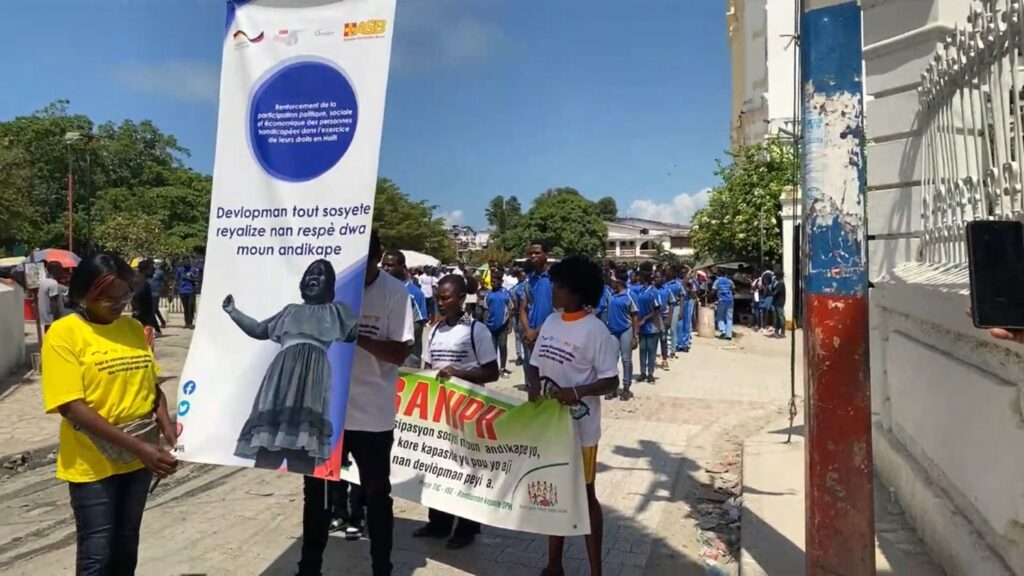
Changing social perceptions of disability was a central focus of the intervention. The project rolled out a large-scale inclusive communication campaign, combining mini-documentaries, accessible content (sign language, image descriptions), television broadcasts, and digital campaigns.
In total, approximately 3.86 million people were reached nationwide. A perception survey of 270 respondents exposed to the campaign revealed that 92.5% of them now recognize people with disabilities as individuals with equal rights and opportunities, far exceeding the initial target of 40%. These results demonstrate the effectiveness of accessible communication tools in deconstructing stereotypes and promoting an inclusive vision of citizenship.
At the same time, adapted sports were used as a lever for social cohesion and self-esteem building. Inclusive sports activities were organized in several departments, mobilizing 275 athletes in disciplines such as soccer, athletics, and sack races. At the end of these activities, 87% of the athletes surveyed reported an improvement in their self-confidence, highlighting the positive psychosocial impact of sport as a space for expression, visibility, and recognition.
4. Sustainable tools and services: making inclusion a long-term commitment
In order to ensure the sustainability of the achievements, the project invested in the implementation of structural measures to promote accessibility and participation. An emergency hotline (*611) dedicated to complaints and reports from people with disabilities was set up in partnership with a telephone operator, and staff were trained in handling requests and referring them to the relevant institutions.
In addition, 20 people were trained in sign language and Braille to strengthen the provision of accessible interpreting services. At the end of the project, at least 12 interpreters were operational and available for events, training sessions, and institutional exchanges, helping to remove major barriers to participation.
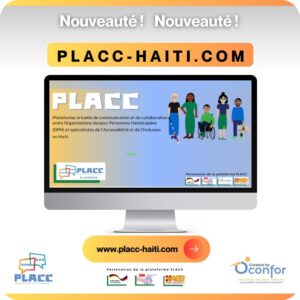
The project also supported the creation of the Communication and Collaboration Platform (PLACC), a national digital space designed to centralize resources, facilitate exchanges between DPOs, and maintain a thematic dialogue on key issues such as inclusive education, access to health care, and infrastructure accessibility. In addition, a national map of 149 organizations for persons with disabilities and a Guide to Removing Barriers were developed and disseminated as tools for advocacy and inclusive planning.
The faces of change: trajectories, dignity, and collective engagement
Behind the figures, the project has supported people on a journey marked by a regaining of dignity and empowerment. Testimonials from community leaders highlight the concrete effects of capacity building and social recognition.
Louis-Jean Brunel – Transforming exclusion into collective capacity
Coordinator of Solidarité pour la Défense des Droits des Personnes Handicapées (SDDPH) in Croix-des-Bouquets, Louis-Jean Brunel has been blind since the age of 12. He recounts a journey marked early on by marginalization: “My disability was a barrier for me in the beginning. I was no longer considered the same within my family circle.” His gradual integration, made possible by adapted schooling and then higher education in law, forged his commitment to the rights and civic participation of people with disabilities.
At the head of an organization with nearly 300 active members—about 80% of whom are people with disabilities—he describes a daily struggle against stereotypes and dependency: “If a disabled person tries to do business, some people go so far as to say, ‘Why don’t you just beg instead? We want much more than that.” ”
The training received as part of the project was a turning point. “When we are invited to participate in this kind of training, we feel valued. We don’t stop at training, we stay connected and develop the ideas we learn. The training in entrepreneurship and business planning enabled him to identify the weaknesses of his own multi-service company and to consider a major restructuring: “I understood my shortcomings and saw the need to start afresh on a different basis to save my company. I learned how to manage financial resources better so as not to go bankrupt.”
Beyond his individual journey, Louis-Jean emphasizes the collective impact of these achievements: “When you get results like this, you feel included; you feel valued as a person. Once we are integrated into the community, we are no longer seen as disabled, but for what we can offer.” ” For him, developing collective economic initiatives and strengthening skills are essential levers for lending credibility to advocacy with the government and paving the way for greater recognition and opportunities for people with disabilities.
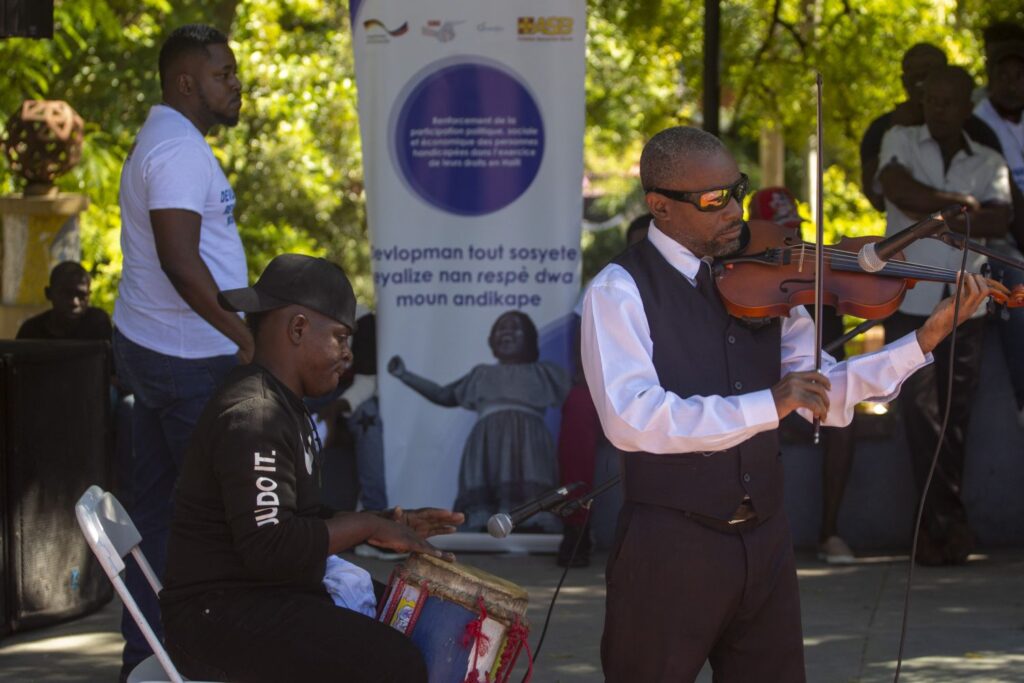
Jean Semé – Leadership as a prerequisite for sustainability
Jean Semé, regional manager of the National Association Network for the Integration of People with Disabilities (RANIPH) in the south, is visually impaired and the father of five children. RANIPH, which operates in eight departments across the country, has been working for more than 20 years to promote respect for the rights of people with disabilities and their social and economic inclusion.
He emphasizes the crucial importance of leadership and advocacy training: “Being in charge of an organization in Haiti is like raising a child. You suffer for all its worries first. If the leader does not involve others, he finds himself alone.” The lessons learned have helped to strengthen more participatory governance: “When you encourage people to participate, it helps to divide up the tasks and contributes to the longevity of the organization.”
Jean Semé points out that advocacy is a long-term process, incompatible with isolation or violence: “Advocacy is a stage in a struggle that can last several years before producing results. You can’t do it alone.” Following the training sessions, he has observed a tangible change in the leaders of organizations: a greater ability to mobilize members, share information, and structure collective actions.
Material support and training in information and communication technologies have also strengthened the network’s operational capacities. At the same time, Jean Semé has a clear economic ambition: a project worth nearly $40,000 aimed at creating employment opportunities and income-generating activities for people with disabilities. “Training only makes sense if it is followed by the implementation of a business plan.”
Through these trajectories, the project reveals a central dynamic: when people with disabilities have the necessary skills, tools, and recognition, they become full-fledged actors in local development. The testimonies of Louis-Jean Brunel and Jean Semé illustrate how the transition from marginalization to participation transforms not only individuals, but also the organizations and communities in which they evolve.
Conclusion: A legacy of inclusion in the face of persistent challenges
At the end of this project, concrete achievements were consolidated in favor of the inclusion of persons with disabilities in Haiti. Partner organizations now have strengthened capacities in governance and advocacy. Functional mechanisms (the *611 hotline, interpretation services, the PLACC platform) facilitate access to information and participation, while reference tools such as the national mapping of DPOs and the Guide to Removing Barriers support a more structured approach to inclusive advocacy. Pilot socio-economic initiatives, although modest, demonstrate the potential for collective autonomy driven by persons with disabilities themselves.
These advances have been achieved despite major constraints. Chronic insecurity has limited physical gatherings and hampered the establishment of formal sectoral consultation frameworks. The weakening of public institutions and the contraction of social funding, exacerbated by the withdrawal of several international donors, have limited the possibilities for institutional anchoring and economic scaling up. The fact that tangible gains have nevertheless been consolidated underscores the relevance of the strategic choices made: prioritizing inclusive, flexible, and decentralized solutions; investing in sustainable social infrastructure rather than one-off actions; and relying on strong local partnerships.
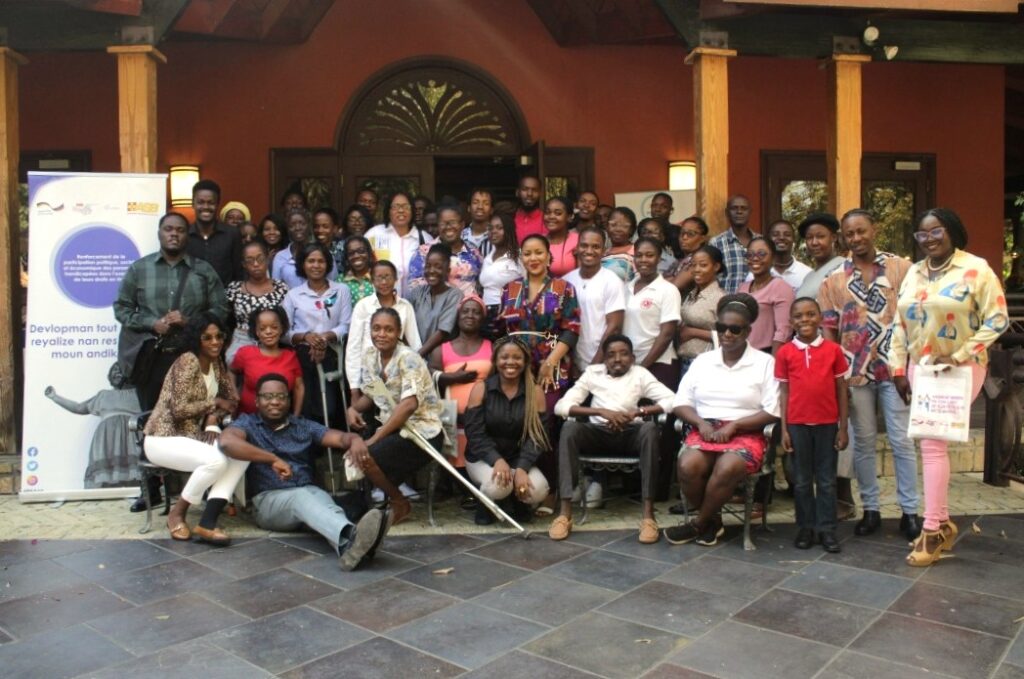
The outlook for the future is based on clear operational priorities:
- Sustain the accessibility measures put in place by ensuring the continuity of the *611 hotline, strengthening and structuring the interpreting sector, and maintaining and regularly updating the PLACC platform.
- Consolidate pilot socio-economic initiatives through targeted post-project support, access to microfinance mechanisms, and the development of partnerships with local public and private actors.
- When the security situation allows, reconnect digital dialogue spaces to physical institutional frameworks, particularly in the education, health, and infrastructure sectors, in order to embed inclusion in public policy.
- Strengthen the monitoring of long-term effects by documenting changes in citizen participation, access to services, and the economic trajectories of persons with disabilities and their organizations.
Three cross-cutting lessons can be drawn from this experience:
- Invest in inclusive social infrastructure (services, tools, platforms) as key drivers of sustainability, beyond the project financing cycle.
- View the economic independence of people with disabilities as a gradual process requiring long-term support and partnerships with economic actors, rather than as an immediate outcome.
- In a context of prolonged insecurity, prioritize flexible, hybrid, and decentralized intervention models that can maintain participation and continuity of action despite constraints.
Ultimately, this project has helped shift the boundaries of inclusion in Haiti, moving from a logic of care to a logic of empowerment. People with disabilities and their organizations now have more tools, skills, and networks that enable them to transform structural weaknesses into collective capacities. The pursuit of targeted and pragmatic support will be crucial in converting these gains into sustainable citizen participation and large-scale inclusion.