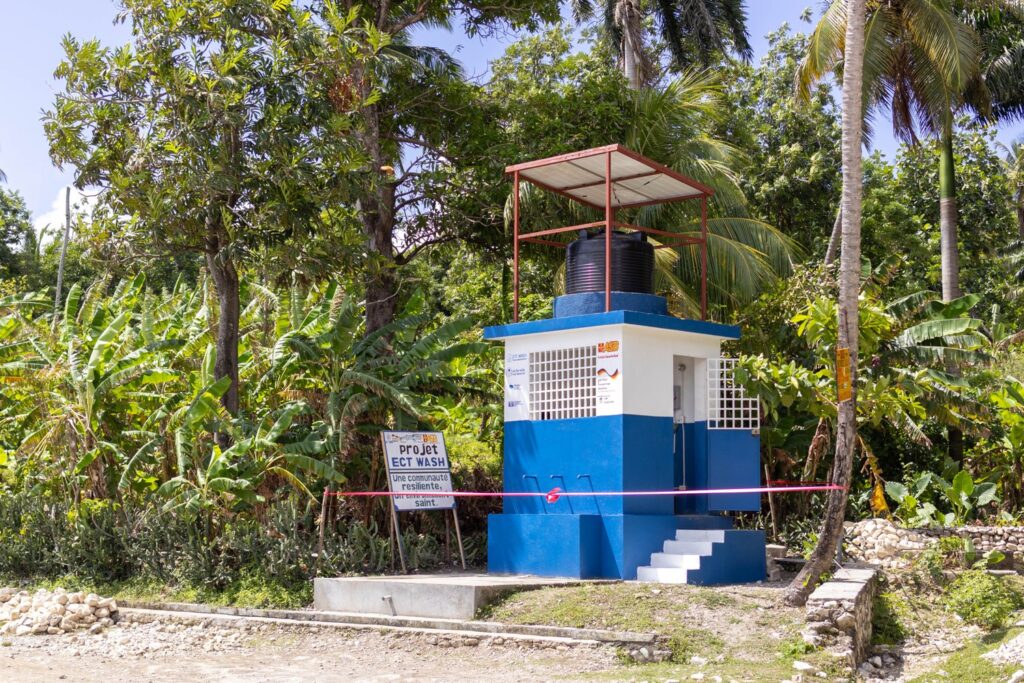
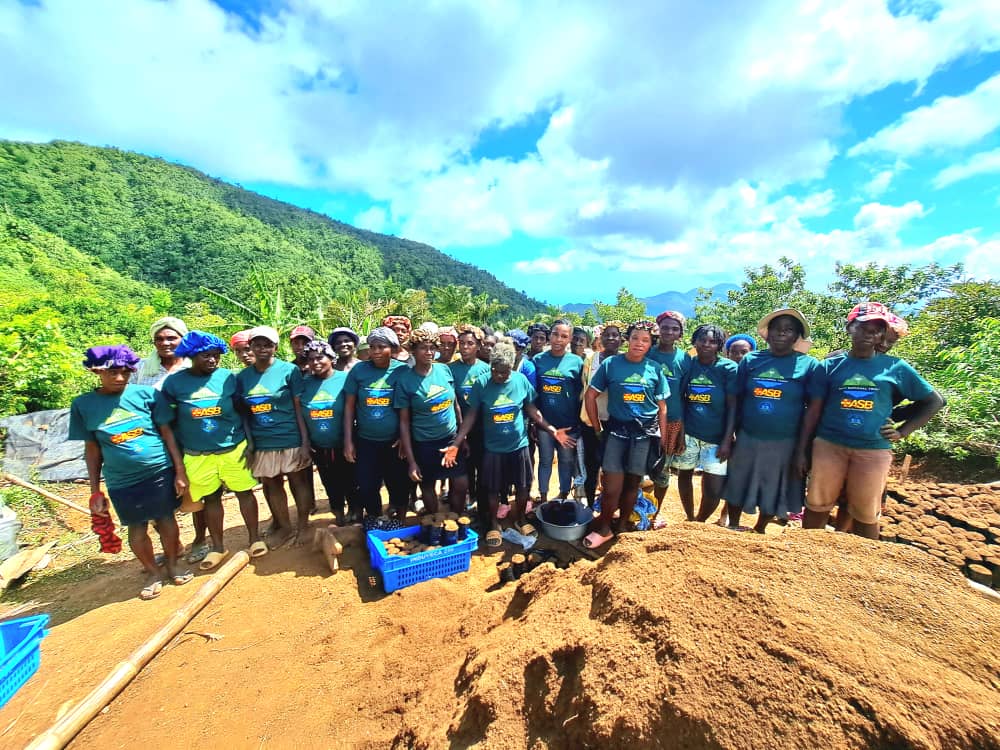
In southwestern Haiti, within the Macaya Biosphere Reserve, the Grand-Bois National Park (PNN-GB) is much more than just a protected area on a map. It is a high-altitude massif that retains water, stabilizes soils, limits erosion, and supports thousands of lives downstream that depend on springs and agricultural land. As rainfall becomes more intense, dry periods lengthen, and pressure on resources intensifies, the question is no longer just “how to protect biodiversity,” but how to make a territory more resilient.
In 2025, the project to strengthen the resilience of ecosystems and communities threatened by climate change in the Macaya Biosphere Reserve, implemented by ASB with the support of BMZ, in partnership with Haiti National Trust (HNT) and the Federation of Tiburon Organizations (FeODTi), reached a milestone: conservation became a system. A system made up of clearer governance, operational protection, measurable restoration, and economic alternatives capable of reducing pressure at the source.
This year, the project strategy was structured around a simple principle: protection and restoration are not enough if the economic causes of degradation remain intact. Hence an integrated approach, articulating four levers:
- Govern: clarify rules, secure land tenure, stabilize responsibilities.
- Protect: strengthen surveillance, improve access, and make enforcement more dissuasive.
- Restore : reforest with diversity, manage invasive species, secure sensitive areas.
- Transform: financial inclusion and conservation-compatible industries.
Grand-Bois Park : a biodiversity reservoir of national importance
Grand-Bois National Natural Park is distinguished by its remarkable biological richness, characteristic of the Hotte massif, one of the most endemic regions in the Caribbean. Its high-altitude forests are home to rare and indigenous plant species, including Magnolia ekmanii, an endangered species, Pinus occidentalis, emblematic of Haitian mountain forests, and species of the genus Ocotea, which contribute to the structure of the canopy and the maintenance of forest humidity.
The park is also a crucial habitat for many endemic animal species, including amphibians and reptiles, whose sensitivity to environmental disturbances makes them valuable indicators of ecosystem quality. Old-growth forest areas, riparian forests, and steep slopes are home to complex ecological dynamics that contribute to water regulation and soil stability.
This biological richness goes beyond scientific value alone. It supports essential functions: protection of water sources, natural water filtration, erosion mitigation, and maintenance of a microclimate favorable to agricultural activities downstream.
However, these balances remain vulnerable. Persistent anthropogenic pressures and the effects of climate change are gradually weakening certain areas of the park. The conservation of endemic species therefore requires active and structured management capable of sustainably protecting these strategic ecological functions.
Restoring to preserve: a structured ecological intervention
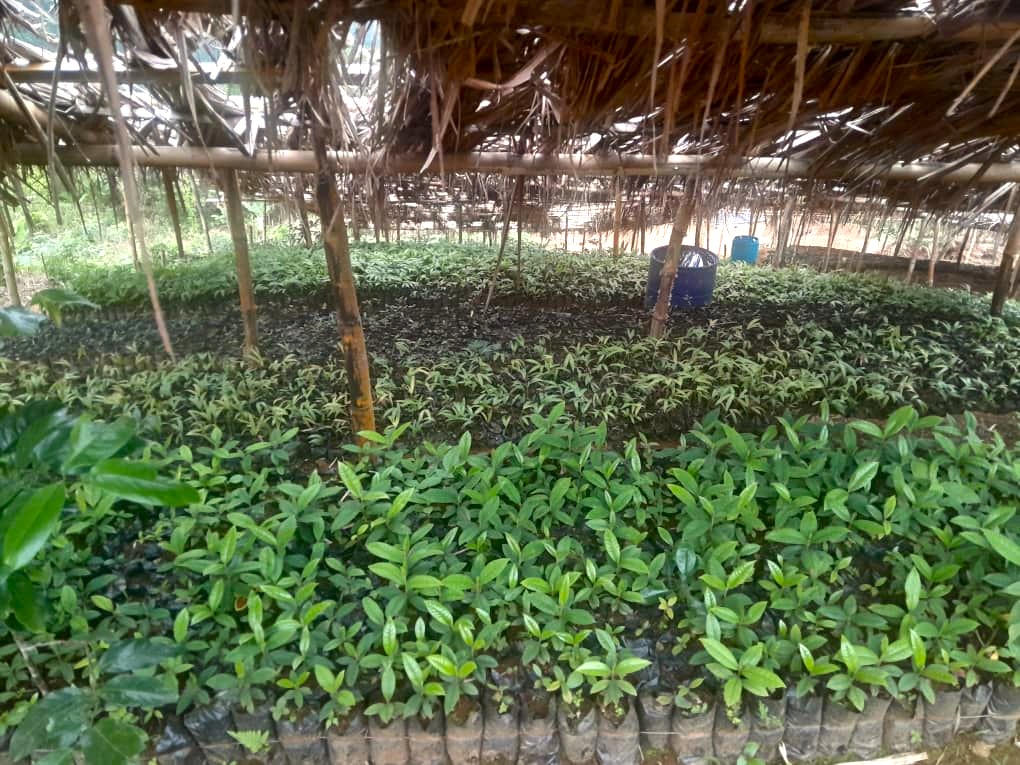
Ecological restoration in Grand-Bois aims to rebuild a functional forest cover capable of stabilizing soils and supporting water cycles. By 2025, the project had consolidated restoration in two areas: volume and quality.
In terms of volume, the results are significant: 89,582 seedlings have been planted in the park, and 183,664 seedlings have been produced in nurseries to ensure the continuity of future campaigns.
In terms of quality, diversity is a strong indicator: 46 species were planted and 42 species were produced in nurseries. This diversity is an ecological safeguard: it increases the ability of restored plots to withstand climatic stress, disease, and growth hazards.
Above all, 2025 marks a technical milestone that is often overlooked in reforestation projects: the management of invasive plants. A counting and monitoring system was implemented, and the removal of invasive species was documented over 189.7 hectares. Without this action, planting efforts risk being neutralized by plant competition and continued degradation. Here, the objective is clear: sustainable restoration, not just planting.
Finally, the restoration was accompanied by targeted interventions in critical areas (access, soil protection, crossing points). Of the six priority points identified, five were completed in 2025, and the last one began implementation in early 2026. This “critical points” approach reduces risks, secures interventions, and protects ecological investment.
Protecting for sustainability: monitoring, governance, and pressure reduction
Restoration cannot produce lasting effects without a robust protection framework. A structured monitoring system supports rehabilitation efforts to contain pressure on forest resources.
Teams of rangers conduct regular patrols throughout the park, limiting illegal activities such as charcoal production, free grazing, and unauthorized logging. Monitoring data indicate a notable decrease in anthropogenic incidents (used as a proxy for illegal activities) between two key periods of the year: the monthly average drops from 26.2 (January-April) to 12.0 (May-October), a reduction of approximately 54%. At the same time, incidents remain predominantly linked to human pressure (74%) rather than natural causes (26%).
The year 2025 also marks a major institutional advance with the completion of a comprehensive and legally validated cadastral map of the park, a decisive step towards securing land tenure. The park has been mapped into 89 parcels with documentation of status and identification of rights holders. Securing measures have been formalized for some of the parcels, helping to reduce areas of uncertainty that often fuel conflicts and undermine the enforcement of rules.
Environmental governance is thus based on three complementary pillars: active monitoring, legal security, and a consolidated institutional framework. This structure strengthens the park’s ability to withstand external pressures in the long term.
Strengthening community resilience: addressing the root causes of degradation
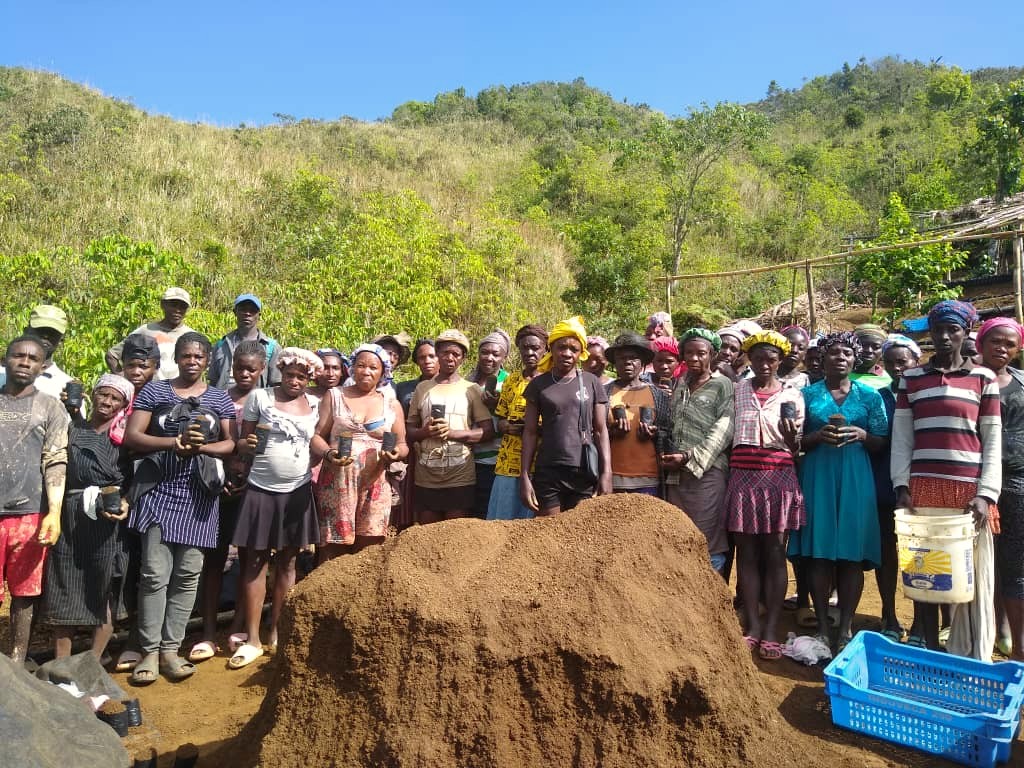
While monitoring reduces immediate pressures, community resilience addresses their root causes. Dependence on activities such as charcoal production and free grazing remains closely linked to the economic insecurity of households living in and around the park.
The project has therefore incorporated a structural component dedicated to strengthening local capacities and developing value chains that are compatible with conservation. This component is led at the community level by the Federation of Tiburon Organizations (FeODTi), which supports the mobilization of local organizations and the strengthening of territorial leadership. The goal is to gradually transform sources of income in order to structurally reduce pressure on ecosystems.
In 2024, 190 community leaders and stakeholders participated in training related to climate and environmental issues, helping to structure committed local leadership. In 2025, the project consolidated 100 savings groups (AVEC/VSLAs) in the target municipalities, bringing together 2,964 members, 60.2% of whom are women. The financial performance attests to a vibrant mechanism: 23,095,220 HTG in cumulative savings and 2,515 loans for 21,043,155 HTG.
Inclusion remains a central principle, with 402 day laborers across activities (particularly in nurseries), with documented female participation (38%). .
Several green sectors have also reached important milestones:
- Beekeeping: 56 beekeepers trained, exceeding initial targets, with consolidation planned for 2026 (sustainability, equipment, support).
- Cocoa : technical and organizational training, distribution of 20,000 seedlings to 100 producers, and launch of a fermentation center.
Community resilience is thus the economic lever for conservation in Grand-Bois, aligning social transformation and ecological protection. However, to remain rigorous, there is still some way to go in terms of the effects on income, particularly for the sectors, as economic maturation (stabilized production/sales) is the stage that will allow the impact on income to be fully measured.
Consolidating achievements and ensuring long-term resilience
By the end of 2025, the Grand-Bois National Natural Park will no longer be just an area under pressure, but a territory in transition. The progress made confirms the relevance of an integrated approach that combines ecological restoration, strengthened governance, and the transformation of local economic practices.
In just a few years, the momentum that has been built up has made it possible to significantly expand the restored areas, stabilize the institutional framework for park management, and reduce direct pressure on forest resources. This development is not the result of a one-off effort, but of a cumulative process that is beginning to produce visible effects on the ground.
The legal consolidation of park management, the gradual structuring of green industries, and the growing involvement of communities reflect a more profound change: biodiversity protection is gradually becoming a shared issue, integrated into local development prospects.
The year 2026 will be a decisive milestone in strengthening this trajectory, deepening institutional anchoring, and ensuring the sustainability of the mechanisms put in place beyond the current funding cycle.
Conservation is not limited to preserving endemic species. It contributes to securing water resources, stabilizing soils, and enhancing the climate resilience of a vulnerable territory. Current experience shows that effective ecosystem protection only becomes sustainable when accompanied by coherent economic and social transformation.