With 4.9 million Haitians facing acute food insecurity (IPC Phase 3+, March 2024), the Arbeiter-Samariter-Bund (ASB) organization completed a resilience project in the municipalities of Grand-Goâve and Petit-Goâve in September 2024. Despite a volatile security situation marked by the expansion of armed gangs in the West Department and rampant inflation, the project “Improving food security and resilience through adapted and diversified production of healthy food in school and community gardens and through disaster risk management” provided a concrete response, leaving a tangible legacy of autonomy and hope within the beneficiary communities.
Implemented over 32 months, from February 2022 to September 2024, the project aimed to sustainably strengthen food security and resilience to climatic and economic shocks. ASB-Haiti relied on a strategic partnership with the Association des Paysans de Vallue (APV), a farmers’ organization with 450 members (65% of whom are women) that has been active since 1987 in agroecology and sustainable natural resource management. Rooted in the communities of Petit-Goâve and Grand-Goâve, the APV provided technical training in agroecology, supervised the establishment of school, community, and family gardens, coordinated the rehabilitation of water cisterns, conducted awareness-raising activities on risk management, supported community reforestation, and facilitated the creation of local seed banks. Thanks to €833,333 in funding from the German Federal Ministry for Economic Cooperation and Development (BMZ), the project maximized the impact of each euro invested by prioritizing local, participatory, and replicable solutions.
Food Security and Resilience: Concrete Achievements of the Project
In a context of land degradation, water scarcity, and recurring risks in Petit-Goâve and Grand-Goâve, the project deployed an integrated strategy based on four complementary components: 1) school gardens for agroecological education and student nutrition; 2) family and community gardens for food self-sufficiency for households and local organizations; 3) reforestation and water management to protect soils and secure uses; 4) disaster risk reduction and management to strengthen local preparedness and coordination. In support of these components and to consolidate the gains made, a community seed bank guarantees sustainable access to adapted local varieties and supports the reproduction of agroecological practices. This approach is not a one-off response: it addresses the structural causes of vulnerability by linking production, the environment, risk preparedness, and the sustainability of inputs.
1. Agroecological school gardens: cultivating autonomy from school age
In 10 schools in the municipalities of Petit-Goâve and Grand-Goâve, educational gardens have been created jointly by the APV, teachers, students, and school management committees, using the Reflection-Action-Training (RAT) methodology. This participatory approach enabled students to take full ownership of the process, from planning to implementation. The schools were provided with agricultural tools and a wide range of seeds adapted to the local context: bananas, cabbages, eggplants, leeks, peppers, chili peppers, carrots, sugar cane, lettuce, and root vegetables (malanga, taro). . Ongoing technical assistance provided by APV ensured the adoption of good agroecological practices, including sustainable soil management, crop rotation, and the use of organic compost.
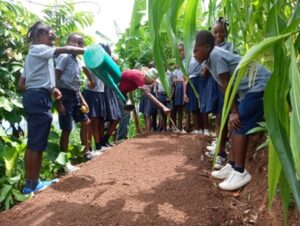
School gardens have become open-air classrooms, where 2,300 students apply the theoretical concepts taught in natural sciences, mathematics, and environmental education in a practical way. This integration into the school curriculum was facilitated by training 90 members of management committees and teachers in the principles of agroecology and active teaching methods. To reinforce this innovative approach, five schools have been equipped with interactive digital whiteboards, enabling the presentation of visual content on plant growth cycles and soil conservation techniques.
The effects have been multidimensional. 100% of school committees have confirmed the positive impacts on self-esteem, health, and quality of education. In concrete terms, 80% of schools now have a continuous supply of fruit and vegetables for the cafeteria, directly improving student nutrition and reducing food costs for families. Beyond food, the gardens have strengthened the students’ sense of responsibility, as they have developed practical skills in agriculture, project management, and teamwork, while raising their families’ awareness of sustainable agroecological practices.
2. Family and community gardens: building food self-sufficiency
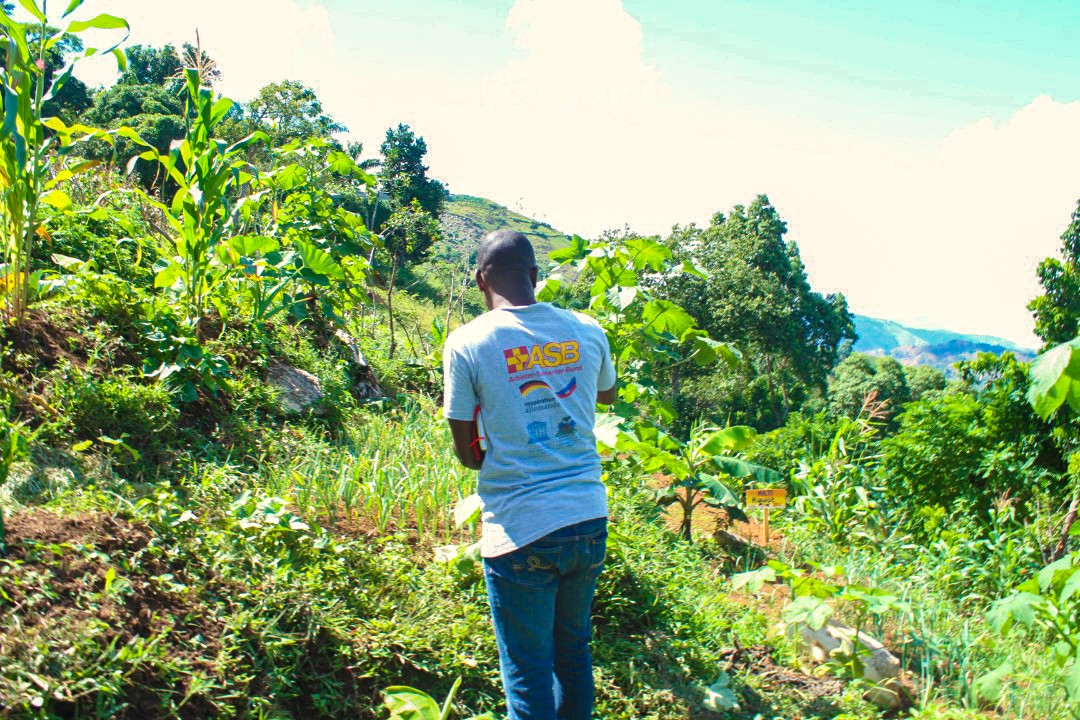
Beyond schools, the project has expanded its activities to households and communities with the creation of 350 family gardens and 17 community gardens.
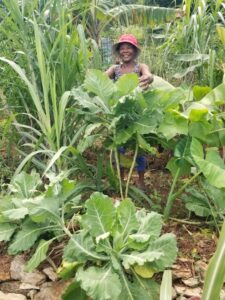
The 350 beneficiary families, all parents of students from participating schools, received complete agricultural kits, suitable seeds, and practical training provided by APV on composting techniques, the layout of beds adapted to local soils, soil protection against erosion, and sustainable agricultural practices. Ongoing technical support accompanied the families throughout the project, ensuring the effective adoption of good practices and adaptation to challenges encountered in the field.
The results on household food and nutrition security were significant. Before the project, only 15% of targeted households consumed fresh vegetables daily. This rate now stands at 78% according to the final evaluation. In addition, 60% of beneficiary families achieved a food diversity score (HDDS) of at least 35 at the end of the project, and 51% of parents reported being self-sufficient in food thanks to the production of their family gardens. This self-sufficiency also translated into substantial savings: beneficiary households save an average of $30 to $40 per month on food expenses, a considerable amount in a context of rampant inflation.
Community gardens, managed by 17 local organizations with 3,500 members associated with the APV, have generated additional income for communities. 100% of these gardens sold a total of 2,754 pounds of produce, generating total additional income of at least 149,645 gourdes (€1,050). Beyond fresh production, some groups have already begun processing primary agricultural products (drying, preservation), paving the way for the development of local agricultural value chains and sustainable economic autonomy. The management committees that have been set up now ensure the continuity of production and marketing, guaranteeing the sustainability of the achievements beyond the project’s funding.
3. Reforestation and water management: establishing a dual environmental shield
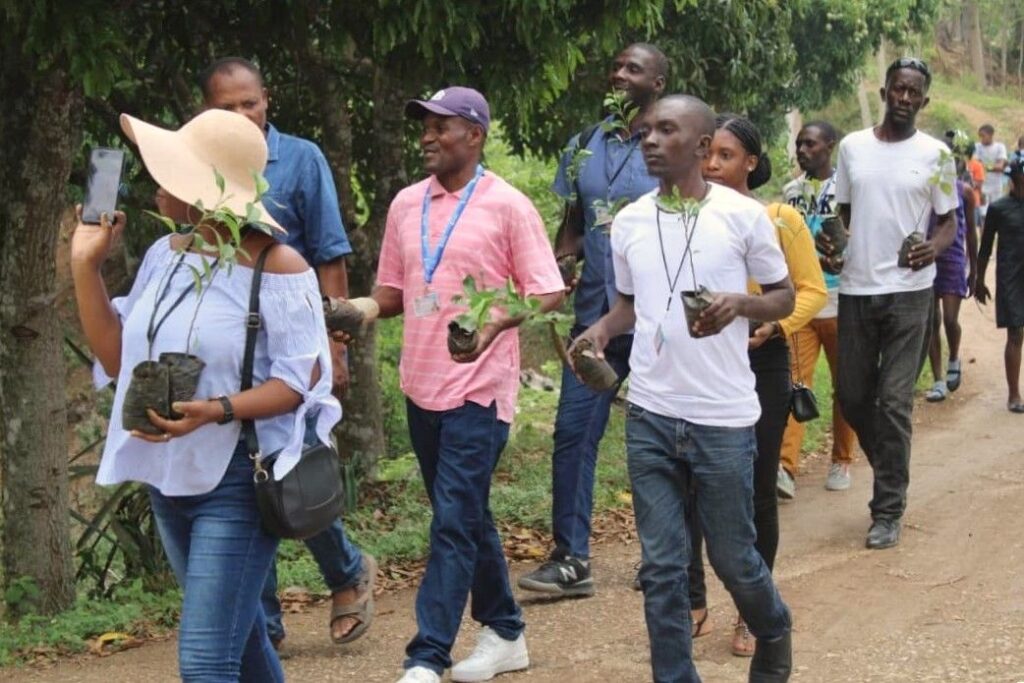
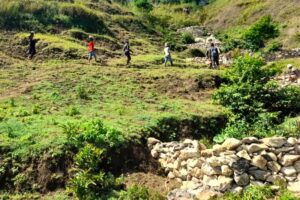
To curb erosion and secure access to water, the project combined massive reforestation and soil conservation work with strong community involvement. Across 16 hectares, 1,230 volunteers planted 17,000 trees, including 800 orange trees, 4,500 lemon trees, 1,800 mango trees, 800 cocoa trees, 800 carambola trees, 800 avocado trees, 800 grapefruit trees, and 6,700 forest and honey tree species. In addition, 1,500 meters of dry stone walls were built by 100 paid workers to stabilize the slopes. At the same time, six critical water points were rehabilitated in Grande Place, Bas Teno, Haut Teno, Calebassier, Bourdeau, and Marécage, in coordination with DINEPA-OREPA and local water committees made up of men and women.
The effects are tangible: 16 hectares of reforestation (106.67% of the target) are helping to stabilize the soil and reduce the risk of erosion, while also generating future income from fruit trees. In terms of access to water, 1,900 families now have safer water thanks to the restoration of systems and the installation of filters; the Grande Place spring alone supplies 750 families with water for consumption and irrigation.
Sustainability relies on community management mechanisms and increased buy-in from local stakeholders. Water committees are responsible for maintenance, regulating usage, and mobilizing contributions for repairs. The commitment of landowners confirms a change in practice in favor of resource protection. Volunteers, trained in planting and maintenance techniques, constitute a pool of skills capable of extending these practices beyond the initially targeted sites.
4. Disaster risk management: preparing communities
To strengthen local preparedness for hazards, an inter-municipal disaster risk management plan was developed in a participatory manner for Grand-Goâve and Petit-Goâve, involving municipal administrations, Local Civil Protection Committees (C
LPC), the Ministry of the Environment, the Communal Section Administrative Councils (CASEC) and communities, with the support of the APV. Twelve Local Civil Protection Committees were trained and equipped, including 25 members specifically trained in flood protection. Four (4) simulation exercises (SIMEX) were conducted to test alert, evacuation, and coordination procedures. At the same time, awareness campaigns were carried out for cholera prevention, adapted from the initial Covid-19-focused program.
The effects are already visible: the inter-municipal plan is available and recognized by both municipalities as a reference tool, inter-municipal coordination has been strengthened, and 12 CLPCs are now able to respond to emergencies in a structured manner. Operational capacities have been created at the municipal level to anticipate, plan, and respond to disasters.
Sustainability is ensured by a coordination committee set up by the APV to monitor the implementation of the plan, as well as by ongoing advocacy for a formal agreement between municipalities, CLPCs, and the Ministry of the Environment. This formalization should guarantee sustainable financial, technical, and organizational support. The participatory approach adopted throughout the process has encouraged ownership by local actors, which is essential for the continuity of the achievements.
5. Seed bank: ensuring the project’s legacy
To guarantee sustainable access to high-quality inputs and consolidate agricultural gains, a functional seed bank has been set up within the APV, with a management committee trained in the principles of preparation, storage, and financial management. A technical guide has been developed for user training, and the bank has been equipped with drying equipment, tarpaulins, bags, pallets, scales, and hygrometers to ensure seed quality. The stock covers food crops (yams, cassava, sweet potatoes, corn, beans, sorghum, tomatoes, eggplants, cabbages, lettuce), fruit trees (mango, lemon, breadfruit) and forest species (acacia, almond, coma), directly supporting 17 community gardens and surrounding producers.
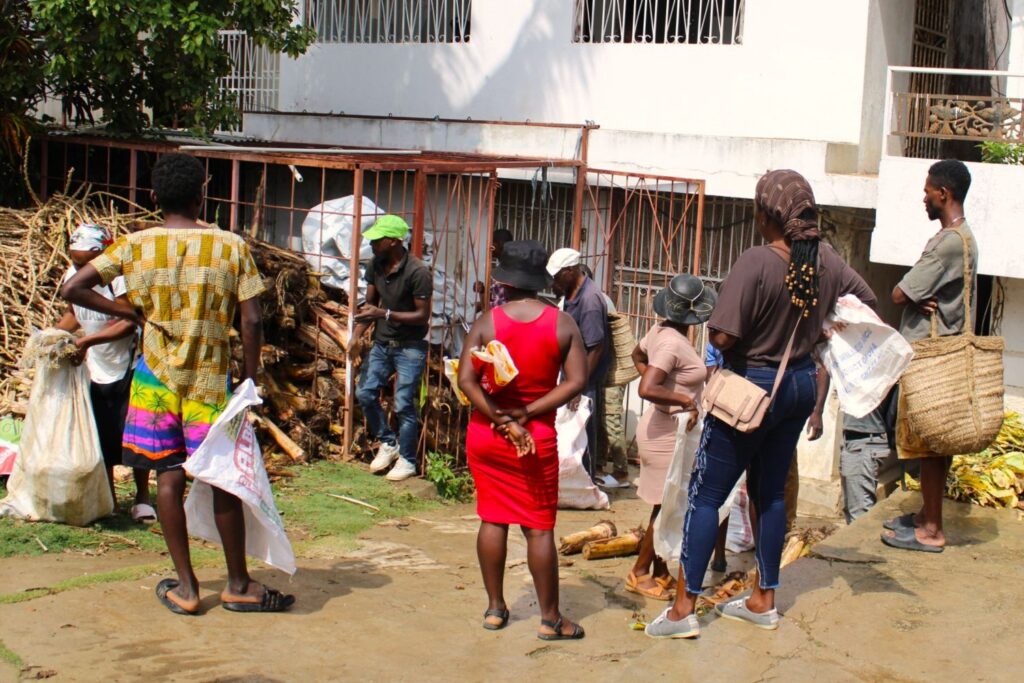
Since its creation in March 2023, the bank has distributed 2,500 kg of seeds to 180 farmers, securing access to adapted local varieties and contributing to the preservation of biodiversity. The loan-repayment mechanism in kind (1 kg borrowed = 1.5 kg repaid after harvest) guarantees the replenishment of stocks and the gradual expansion of supply. This system, managed collectively and participatively by the APV and 17 community organizations, also generates its own income through purchase-storage-resale, strengthening the institutional sustainability of the APV. Open to both members and non-members, the bank extends its impact beyond direct beneficiaries and consolidates local seed autonomy, which is essential to the resilience of production systems.
The faces of change: voices from a community in motion
Beyond the figures, the true impact of the project can be seen in the lives it has touched. Behind every garden, every cistern, and every tree planted lies a story of transformation, learning, and restored dignity.
At Haut-Piton Community School, Janel Rathon, a young student passionate about agriculture, embodies this dynamic. His school’s educational garden has become a living laboratory where he has been able to combine theory and practice: “At first, it was through school: we dug furrows, planted peppers, cabbages… Little by little, I got involved in the activity and now I have my own garden.” Today, Janel is experimenting with his own solutions, making natural pesticides from chili peppers and ash to protect his crops. His story illustrates how the project has awakened a spirit of experimentation and leadership among rural youth.
For Vatis Genesis, a mother and active member of a community garden, the project has meant food security and renewed solidarity: “If you have a garden, you can give your neighbor a few tomatoes, a head of cabbage… That’s what solidarity is all about.” ” Her harvests now provide daily food for her children: “When you work the land, even without money, you find food.” She also highlights the techniques she has learned, such as terracing, which protect the soil and ensure better harvests.
For his part, Jean-Louis Murat, a father, testifies to the direct economic benefits: “I no longer need to buy peppers or tomatoes. With that money, I can pay for my children’s schooling.” His family garden is a source of indirect income and dignity for him: he is no longer dependent on outside markets.
Finally, Samuel Banzo, director of the Haut-Piton community school, observes the broader impact of the project: “The experience is useful from an educational standpoint. The students acquire comprehensive technical skills to cultivate a garden from start to finish.” According to him, the effects extend far beyond the schoolyard: “It’s the most beneficial project we’ve had, with long-term effects, because the students have replicated the experience at home and their families have benefited from it.”
These stories paint a picture of a community that, through training, access to resources, and local solidarity, has transformed its vulnerabilities into capacities for action. From an agricultural initiative, a whole collective movement of autonomy and resilience has taken root in Petit-Goâve and Grand-Goâve.
Conclusion: A lasting legacy in the face of persistent challenges
The project left a tangible and transformative legacy in Petit-Goâve and Grand-Goâve: productive school, community, and family gardens; rehabilitated water systems; slopes stabilized through reforestation; local committees better prepared for emergencies; and an operational seed bank serving producers. Supported by a local partnership with APV, the intervention combined agroecological production, sustainable natural resource management, and disaster risk reduction, laying the foundations for more robust food self-sufficiency and increased community resilience.
These advances were achieved despite a challenging environment. Persistent insecurity limited travel and delayed certain supplies; drought and irregular rainfall put young plantations to the test; inflation eroded household purchasing power and made inputs more expensive. The fact that results have been achieved under these conditions underscores the relevance of the choices made: prioritizing local, participatory, and low-cost solutions, reinforced by ongoing technical support and community ownership.
The challenge now is consolidation, with clear and measurable priorities:
- Sustain school production and nutrition by maintaining technical support, basic equipment (water, compost, tools), and educational links with the curriculum.
- Expand seed autonomy by increasing seed bank stocks, improving quality protocols (selection, drying, germination tests), and expanding the network of seed multipliers.
- Ensure the sustainability of water infrastructure through maintenance plans by water committees (schedules, maintenance funds, symbolic fees), and ad hoc technical support from DINEPA-OREPA.
- Maintain vegetation cover and erosion control structures through seasonal replanting and repair campaigns, involving schools, community organizations, and landowners.
- Institutionalize risk management practices: annual SIMEX exercises, updating of the inter-municipal plan, and formalization of agreements between municipalities, CLPC, and the Ministry of the Environment to secure financial and logistical support.
Three cross-cutting recommendations can guide the next steps:
- Strengthen the monitoring of community actions (indicators of production, savings achieved, access to water, vegetation cover) to objectively assess progress and guide adjustments.
- Develop micro-value chains (processing, conservation, short supply chains) to capture more local value.
- Invest in the continuing education of young people and women, who are the drivers of practice replication.
In short, this project has planted both trees and capacities. Communities now have the tools, know-how, and governance structures to transform adversity into paths to self-sufficiency. Continued targeted and pragmatic support will enable these gains to be converted into sustainable resilience, benefiting families in Petit-Goâve and Grand-Goâve.