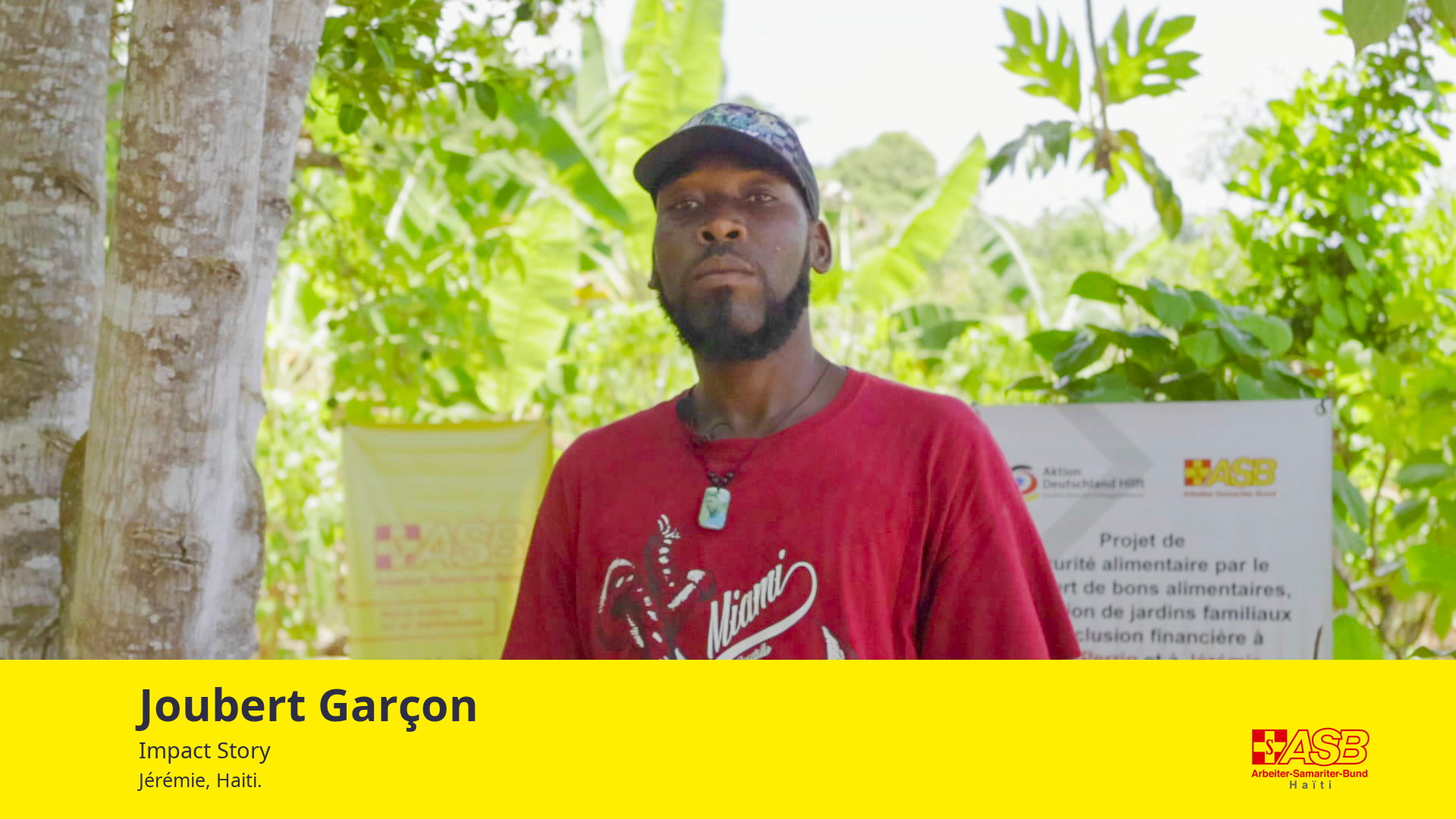
In Jérémie, Joubert Garçon lives with his wife and their two children (ages 12 and 7). Like many fathers in his community, he feeds his family through gardening. Talking about this project that has become part of his household’s life is, he says, a privilege.
But before the food security, livelihoods, and water access project implemented by ASB in Camp-Perrin and Jérémie, even the smallest need meant long journeys.
“Before, I might for example need a leaf to make tea at night, and it was very far to go get it… Since the project, I no longer need to go so far: I find everything in my home garden.”
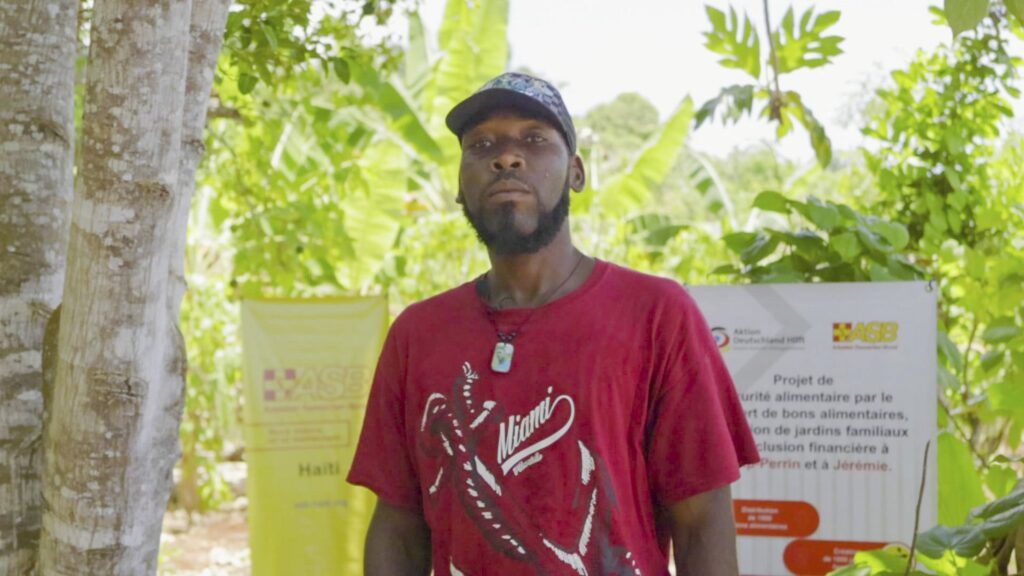
Tools and Training to Change His Approach
He owes this shift first to the seeds he received through this project: he lists them precisely, yam, peas, and many others. The project also gave him tools he did not have, support that, he says, benefit his family as much as the community around him.
Among these tools, one memory in particular has stayed with him.
“They gave me a pickaxe, very useful for working more… and a machete, also very useful. This machete cost 300 dollars, and I didn’t have that amount: I received it for free, and that made me happy.”
Beyond this equipment, the project also gave him technical training that left a mark on him: a trainer who came to the field taught him a simple method to give a second chance to pigeon-pea seeds that were struggling to sprout, by soaking them in water before replanting them the next morning.
From that same training, another, simpler habit has stayed with him.
“My garden is protected because it has trees, it’s shaded, which means it’s protected from both the sun and the rain.”
Harvests That Feed, Knowledge That’s Shared
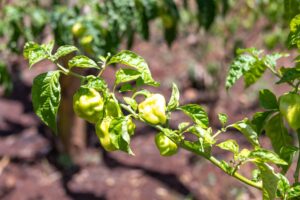
Seeds, tools, and training now translate into real harvests: corn, yams, peas, and peppers now grow in his yard.
“They first gave me corn. Today, if I’m hungry, whether it’s me, my wife, or my children, we can pick and roast corn even before it’s fully dry, and that’s how I get by.”
These harvests remain fragile, however: one challenge persists, the drought. He knows it well: with something to water with, no matter how strong the sun, his crops would move forward.
Despite lacking a watering can, his success has not gone unnoticed in the neighborhood.
“People come to ask me how I grow this pepper; when I explain it to them, I see that this pepper gives me huge harvests, which I benefit from a great deal.”
Buoyed by this recognition, he says he is satisfied with what the project has brought him, and hopes it never stops, so he can keep moving forward with his community.
Through Joubert Garçon’s story, this intervention shows how seeds, tools, and training, the three strands of the same support, can transform a family’s daily life and reduce its dependence on the market. Water remains the main obstacle to overcome for these gardens to reach their full potential.